Our Approach
Owner-Minded. Results-Focused. Execution-Driven.
The Operating Philosophy
Continuous Improvement at Every Level
At the core of the Vantage operating philosophy is a consistent set of questions: How can this be done better? Faster? More efficiently? How can it create more value?
Vantage builds operating systems to increase occupancy, reduce vacancy loss, accelerate apartment turns, improve resident satisfaction, strengthen procurement, and increase NOI.
Vacancy should be addressed before it occurs, not after an apartment has already been sitting empty. Renovations should move quickly without sacrificing quality. Recurring problems should be solved at their source rather than repeatedly patched. Staffing should reflect the actual needs of the property, and employees and vendors should operate under clear, measurable expectations.
Where the Response Happens
Owners Can’t Control the Market. They Can Control the Response.
Owners can’t control tax assessments, insurance markets, or interest rates. They can control how the property responds:
- 01Payroll that produces the operating capability ownership is paying for
- 02Less duplicated cost between onsite staff and outside vendors
- 03Occupancy protected, vacancy days minimized
- 04Utility consumption monitored and waste corrected
- 05Tax assessments challenged when appropriate
- 06Risk managed and preventable claims reduced
- 07Materials and services purchased at competitive pricing
- 08Capital invested only where the market will pay it back
Management isn’t administrative anymore. It’s the defense of NOI and asset value.
The Operating Perspective
Built as an Owner, Not Just an Advisor.
Before founding Vantage, Mark Pjeternikaj ran repositioning and asset management for his family’s own portfolio — multifamily properties across New Jersey. The frameworks on this page, and the case studies behind them, were built and proven with real capital on the line, not theory.
Vantage brings that same owner-operator discipline to other owners who want it applied to their portfolio.
Historical results reflect the founder’s owner-side career before Vantage.
The Operating Framework
People. Process. Product. One Financial Outcome.
In a rising-cost environment, sustainable NOI improvement requires more than cutting expenses. It requires aligning the people responsible for execution, the processes that create measurable accountability, and the product the market is willing to pay for.
I oversee all three directly — not through a rotating cast of property managers.
01
People
Payroll is often a property's largest controllable expense. The objective isn't to employ fewer people — it's to hire the right people, place them in the right roles, train them properly, and make sure the property gets the productivity it's paying for.
When a property carries substantial payroll while still outsourcing routine work, ownership may be paying twice for the same function. Onsite staff and outside vendors should complement each other, not duplicate costs.
02
Process
As costs rise, small inefficiencies get expensive fast.
Every critical function needs a clearly assigned person, a measurable standard, a deadline, and a documented result — vacancy, collections, apartment turns, work orders, purchasing, utility usage, vendor performance, capital projects. All of it tracked, all of it managed.
Accountability isn't measured by who looks busy. It's measured by whether the result was achieved.
03
Product
Capital gets invested according to what the market will actually reward.
Under-delivering suppresses rents, reduces demand, and weakens a property's competitive position. Over-delivering is just as costly — spending on finishes or amenities that won't produce higher rents, stronger occupancy, better retention, or lower operating costs.
The goal isn't the cheapest product or the most expensive one. It's the right product for the market, with an appropriate return on every dollar invested.
Reporting With Involvement
Reports Should Direct Attention — not Replace Involvement
Vantage uses reporting, dashboards, and KPIs to identify where attention is needed. The work does not stop at the report.
Operational understanding comes from connecting the numbers to the property: walking apartments, reviewing work quality, observing staff, evaluating vendors, examining leasing activity, and understanding what is happening in the surrounding market.
Information is only valuable when it produces a better decision and that decision is executed.
Technology
Technology Supports Judgment. It Does Not Replace It.
Artificial intelligence and automation will increasingly improve reporting, communication, KPI tracking, workflow management, and administrative work.
As information becomes easier to produce, the value of judgment, leadership, operational expertise, accountability, and execution will increase.
Technology can identify that a problem exists. Experience is required to understand why it exists and how to correct it.
The Cost of an Empty Unit
Every Vacant Day Is Revenue That Cannot Be Recovered.
Every vacant apartment represents revenue that can never be recovered. Unlike many expenses, lost rent is permanent — once a unit sits vacant, that income is gone forever.
Reducing vacancy through proactive leasing, efficient unit turns, resident retention, and disciplined leasing practices is one of the fastest ways to improve NOI.
Core Beliefs
The Standards Behind the Numbers.
- 01
A property is only as strong as its daily execution.
- 02
Cosmetic improvements cannot overcome weak operations.
- 03
Staff accountability matters.
- 04
Leasing quality matters as much as leasing volume.
- 05
Expenses must be reviewed continuously, not once a year.
- 06
Vendor relationships need pricing discipline and oversight.
- 07
Maintenance is both an operating function and a resident retention strategy.
- 08
Financial reports should lead to decisions, not just record history.
- 09
Every operational decision should support long-term asset value.
Active Oversight
Exception-Based Operating Reviews. Not Generic Reporting.
Vantage is built around active oversight. The firm does not wait until problems become obvious — it looks for early signs in the numbers, the staffing, the property condition, and the leasing activity.
Standing review categories
Revenue and occupancy
- Income versus rent roll
- Vacancy loss
- Delinquency
- Leasing velocity
Staffing and operations
- Payroll versus staffing needs
- Unit turn timing
- Problem-property watchlists
Expenses and contracts
- Maintenance expenses
- Contract services
- Utility expenses
- Insurance costs
Capital and financial performance
- Capital project costs
- Tax appeal opportunities
- Budget variances
- NOI variance
Core Philosophy
Property values are increasingly determined by operational performance rather than market appreciation alone.
Every unnecessary expense, every vacant apartment, every delayed unit turn, and every operational inefficiency directly impacts NOI — and ultimately the value of the asset. Owners who consistently outperform will be those who operate with discipline, control costs, maximize revenue, and execute relentlessly.
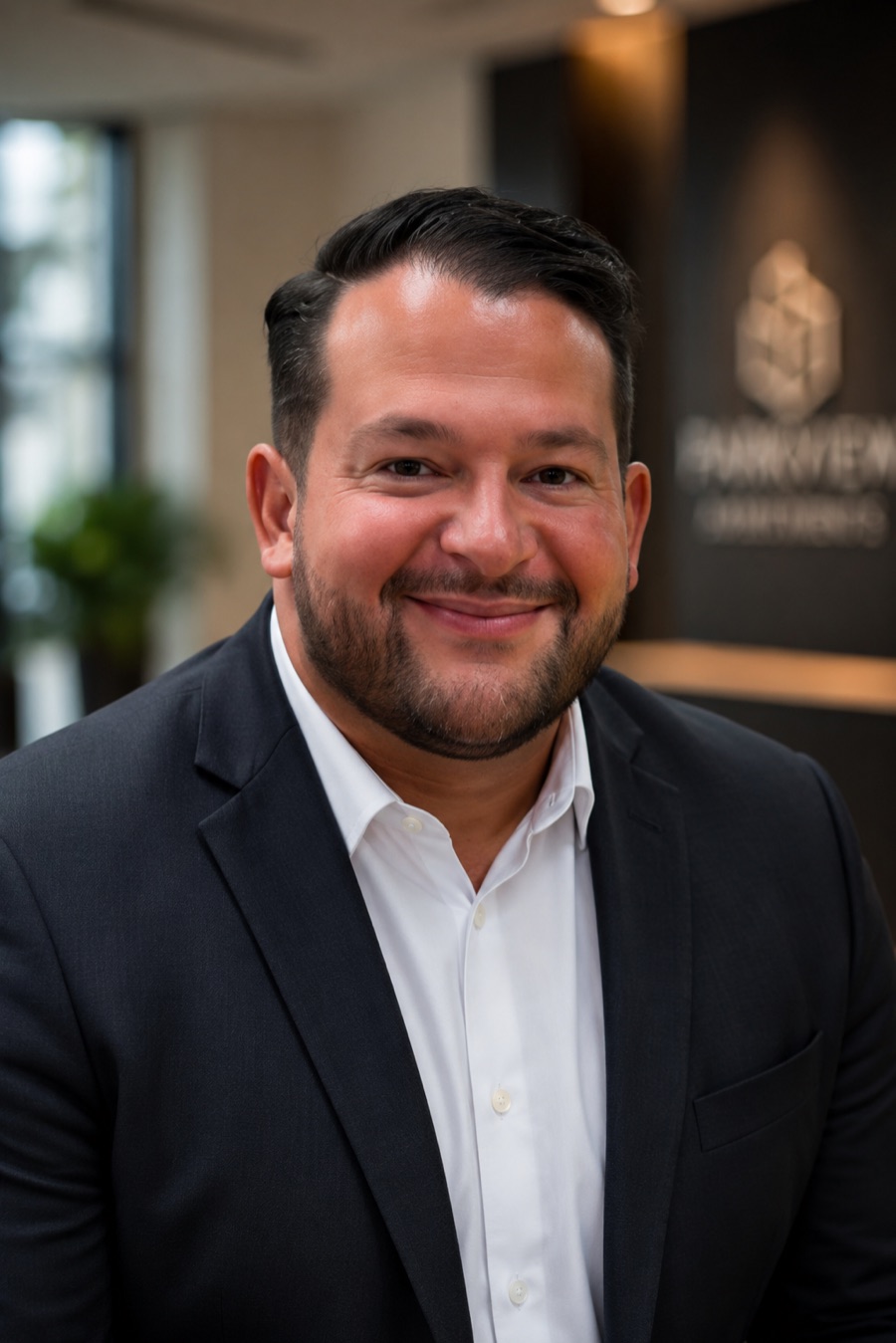
Who You’ll Work With
Mark Pjeternikaj, Founder
The frameworks on this page aren't delegated to a management layer. Mark built them running his family's own portfolio, and he is the one who applies them to yours.